Reference research · Nautilus 5711
The Nautilus is a continuous design system: dial embossing, case ears, bezel, bracelet taper and finishing must agree from every angle.
This Patek Philippe Nautilus superclone QC guide focuses on the 5711 family without mixing it with the current 5811 or complication references. Patek Philippe introduced the steel 5711/1A in 2006; later genuine examples used calibre 26-330 S C. Material, dial and bracelet details also vary across 5711 references, including steel, rose-gold and anniversary configurations.
A reliable assessment starts with the complete reference suffix and material. The selected catalogue example is titled 5711/1R, so a steel 5711/1A photograph is not a sufficient visual baseline. Record the configuration first, then judge whether dial, date, case, bracelet and movement presentation form the same reference.
Patek Philippe Nautilus superclone QC guide: identify the full 5711 reference
Patek Philippe’s 2006 Nautilus release described the steel 5711/1A with an integrated bracelet, satin-finished outer links and polished center links, hours, minutes, sweep seconds and date at 3. The 2021 final steel 5711 references used the self-winding calibre 26-330 S C. Rose-gold 5711/1R configurations require their own dial tone, case material and bracelet baseline.
Do not use 5811 dimensions or clasp details to grade a 5711 without documenting the difference. The current 5811 is 41 mm and includes newer case and clasp engineering, while the 5711 lineage has its own construction history. Product titles that mix material or suffix information should be clarified before approval.
Calibre 26-330 and movement presentation
Patek Philippe states that genuine calibre 26-330 was introduced in 2019 as an evolution of calibre 324. The date-and-seconds 26-330 S C family is 27 mm in diameter and approximately 3.32 mm thick, with a 35-to-45-hour official reserve depending on the version. Those specifications identify the genuine movement only.
A store configuration may use a decorated or alternative movement. Request the installed movement in plain language, a caseback image with the rotor shifted, and confirmation of the service path. Visible engraving and bridge shape can be compared, but they do not prove manufacturer origin, genuine materials, reserve or regulation.
| Checkpoint | Genuine reference baseline | Evidence for the selected unit |
|---|---|---|
| Reference | 5711 material/suffix controls dial, case and bracelet | Full selected configuration recorded |
| Movement | Later genuine 5711 uses calibre 26-330 S C | Installed movement and service path stated |
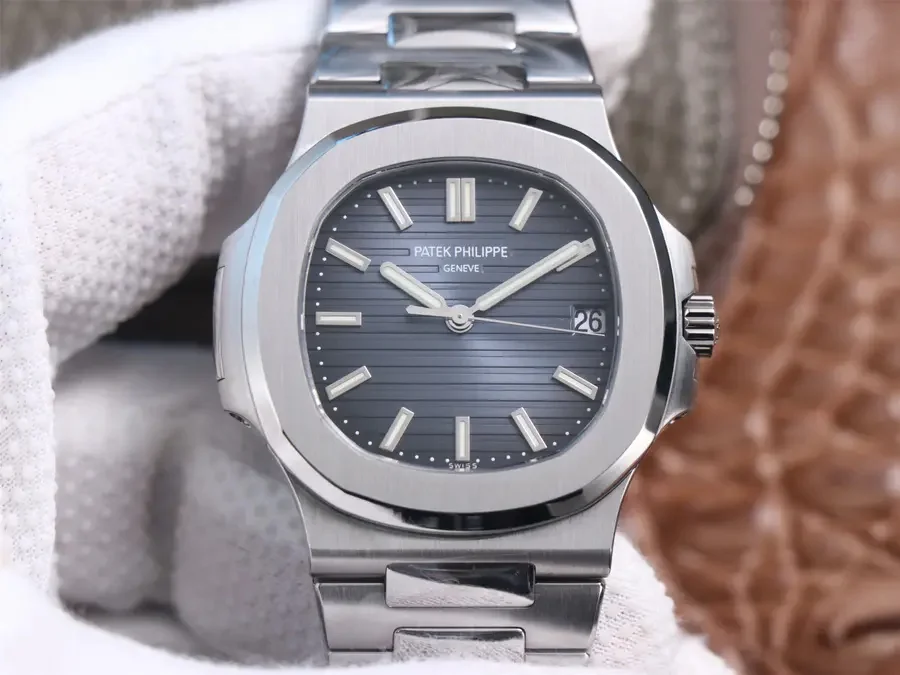
| Dial | Reference-specific embossed horizontal pattern and date | Neutral straight and oblique macro images |
| Case | Nautilus ears and alternating surface finishes | Matched left/right views and unit measurement if supplied |
| Bracelet | Integrated reference-specific link and clasp design | Flat, draped, open-clasp and included-link evidence |
Dial gradient, horizontal embossing and date
Photograph the dial straight on under neutral light, then at a shallow angle. Inspect horizontal embossing spacing, sunburst or gradient behavior, applied markers, hand finish, signature and date frame. The date numeral should sit consistently inside the aperture. Strong side lighting can exaggerate the gradient and hide uneven print, so one image is not enough.
Check that the dial opening, bezel and minute track remain concentric. The Nautilus shape is not a simple circle; perspective distortion changes the apparent width of the case ears. A second photograph from farther away with modest zoom provides a more reliable geometry check than a close wide-angle phone image.
- Full reference and material confirmed
- Straight neutral-light dial photograph
- Matched left and right case-side views
- Caseback with rotor in two positions
- Bracelet shown flat and naturally draped
- Clasp open, closed and viewed from the side
Case ears, bezel and finishing transitions
Inspect both case sides at matching height. The lateral ears should present deliberate, balanced geometry, while the bezel and mid-case maintain clean transitions between polished and satin surfaces. Look for softened edges, uneven gaps or a caseback that appears incorrectly seated. Protective film must be distinguished from the actual metal surface.
Thickness should be measured only when it matters to the order, with the tool positioned consistently and the result tied to the unit. Do not copy the dimension of a different Nautilus reference. Crown alignment and engagement should be shown once during setting, without unnecessary repeated operation.
Bracelet taper, articulation and clasp
Lay the bracelet flat and then drape it to show articulation. Inspect link spacing, polished center surfaces, satin outer surfaces, taper and end-link integration. A stiff section, rough edge or asymmetrical end link is easier to see in motion than in a front photograph. Ask for both sides because finishing can differ.
The clasp should be documented open, closed and from the side. Record included links after sizing. Newer 5811 clasp features should not be assumed on a 5711-style configuration. What matters is whether the sold clasp matches the selected reference and functions cleanly.
Record the suffix, dial and material as one identity
The digits 5711 alone are insufficient for a full comparison. Add the material and suffix shown by the selected configuration, then record dial color, date frame, bracelet and clasp. A rose-gold-style product with a dark dial should not inherit the same finish expectations or color notes as a steel blue-dial example.
Save one neutral-light front image as the identity frame for the unit. This becomes the anchor for later questions about replacement dials, hands, date wheels or bracelet parts. If the factory/version changes, create a new entry rather than overwriting the earlier specification and losing the history.
Ownership checks after delivery
During the first days, observe crown engagement, winding, date change, hand alignment and timekeeping without repeatedly testing the watch to its limits. Bracelet links should move freely and the clasp should remain secure during ordinary wear. Photograph any issue before polishing, sizing again or opening the case.
Keep the watch away from water unless a current unit-specific pressure result and seller instructions support exposure. If servicing is required, confirm the movement before ordering parts. A decorated movement may require different access and replacement components from the genuine 26-330 architecture it visually references.
Keep the original-resolution dispatch files, bracelet sizing record and product URL together. That compact archive gives later support a reliable baseline for finish, alignment, supplied parts and movement wording.
Build the final approval record
Review the current Nautilus 5711/1R-style configuration and keep its material and dial baseline distinct from steel 5711 examples. The Omega movement guide explains the same boundary between genuine calibre terminology and installed product evidence.
Save the final product description, movement statement, configuration, QC set and any measured result together. If the delivered bracelet is sized, record the removed links and accessories in the same file.
Reference sources: Patek Philippe’s official 2006 Nautilus release, 2021 5711 release and calibre 26-330 overview.
Buyer questions